There is hope for literacy in the world

Poetry has not died. It lives on, stubborn and grasping for its place in a world where art has too often been shoved to the side by commercialism. And it has planted seeds in those most innocent–our children. Through boys and girls like this wondrous three-year-old, it will grow and blossom far surpassing in effect any bestseller.

Originally posted 2010-08-22 16:02:37.

I’ve Emerged From the Fog of Querying

No, I haven’t taken a Digital Sabbatical, but I should. In fact, I’m going to blog about that tomorrow over at ANWA Founder & Friends.

My exciting news is that I’ve begun my third novel and it’s set in Beirut, Lebanon. It’s the story of an American teenager trying to hold her family together as the capital collapses into civil war. Since I graduated from high school there (ACS – the American Community School) at about that time and was, indeed, on hand in 1975 when things began to get dicey, I can draw on my own memories as well as my imagination (because, yes, this is fiction…not my family).

As you know, however, from an earlier posting…my memory is rather unreliable. Thank goodness my mom kept a family log all those years we lived overseas. So what did I just do last week? I took advantage of Allegiant Air’s new direct cheap flight between here and LAX and flew down there for 10 days of fun and research. The day before I left, I gathered my parents, my younger brother, and one of my younger sisters and started shooting questions at them. Every now and then I’d have to interrupt all their cross talk (after all, my dad’s got a hearing problem and he’d usually start telling me something in the middle of one of my brother’s responses). My sister found the whole process hilarious. But at least I came away with some great notes…AND the family logs for 1974-77.

It may have cost me $20 to check an extra suitcase on the return flight (these journals are big, thick, and heavy), but it will prove invaluable in the end. And the time with family? Priceless!

Originally posted 2010-08-05 17:13:52.

Beware Self-Doubt in Query Phase

I’m in that foggy phase of writing–I’ve seen my child off into the wide world (I’d say wide, wide world except I haven’t yet queried most of the agents I’ve selected) and am having trouble letting go of it in order to turn around and conceive another. It’s as if Laps is out there wandering in the mist and I’m trying to get a fix on her, keep track of her progress…but the fog gets in the way.

During this phase, it’s important to redouble my goals and not succumb to self-doubt. One day I will get an agent and be published, I am sure. Of course, I’m more sure of that when my baby is closer at hand (as in, I’m in the middle of writing it). Once it’s out there, I have to fend off the little devil in my mind that says, “Forget about all this hassle. Stay in full control and self-publish. Let your audience find you.” I have named this little devil “Spam”–an acronym for Self Publishing Argument Monster.

Thanks to Publishers Weekly, and particularly author Zoe Winters, the following video has helped drive away Spam today:

Originally posted 2010-07-14 15:26:51.

The Kindest Rejection of All

Having sent out 8 queries so far (most of which I emailed only two days ago), and receiving two kind form rejections and one glorious request for my full manuscript, I am in that most uncomfortable state as a writer: awaiting judgment.

I know, I know…I need to put those thoughts aside and get on with my next WIP. And I will. I simply need a few days to breathe.

In the meantime, I lie awake at nights, my mind grasping for the next big idea (because the one I had now seems too daunting), fiddling around with fantasies of success, and worrying over whether I’ve done everything I could to be prepared for the best…or the worst.

I don’t envy agents and I know they really do want to find treasures among all the queries they receive. I’m convinced of this because they usually lay it all out so plainly for us. They tell us upfront what they’re interested in, and they often bend over backwards to give us clues (in blogs, interviews, appearances at writers conferences, etc.) to the kinds of queries that turn them off and the kinds that catch their attention.

Still, they have to write so many rejection letters that they’ve had to come up with form rejection letters for use in most cases. Even those form rejection letters ooze with remorse. I think they really do feel our pain.

I can’t recall where I came across this some years ago, but I call it the “kindest” rejection letter I’ve ever read. It was supposedly from a Chinese magazine (which makes all kinds of sense, because Asians are more concerned with saving face–either their own or another’s–than being honest):

We have read your manuscript with boundless delight. If we were to publish your paper, it would be impossible for us to publish any work of a lower standard. And as it is unthinkable that, in the next thousand years, we shall see its equal, we are, to our regret, compelled to return your divine composition, and to beg you a thousand times to overlook our shortsightedness and timidity.

Maybe we should all move to China.

Originally posted 2010-07-07 09:57:36.

Our Uphill Battle as Writers, Part Two

Yes, it’s hard to get published. It is particularly hard if you’re trying to go the traditional route (finish your manuscript, find an agent who loves it and takes you on, get a contract with a big publishing house…or even a smaller one, etc.). Does that mean we stop trying to write? No.

Does that mean we think about self-publishing? All the experts used to give an automatic “No” to this, as well. “But the times, they are a-changing.”

Several days ago, I quoted Garrison Keillor at length about how the excellence of publishing as we know it is doomed because of the flood of self-published works hitting the marketplace, thanks to e-reading devices like the Kindle, the Nook, and now the iPad.

Of course, that is one man’s opinion. It is true that more and more people are writing today, given the easing of the process both of writing (thanks to the personal computer, which is not to say that writing is ever easy) and of publishing (thanks to the growth of self-publishing companies and POD companies and, mostly, Amazon).

What is strange is that fewer people are reading, yet more people are writing. That fact, in and of itself, probably lends credence to Keillor’s argument. Anybody can write (or, at least, pretend to write), but you have to be a great reader to be a good writer. But that is a topic for another day.

Today, I wanted to spread some of the good news for those of us struggling for the publishing industry’s seal of approval. Two weeks ago today, Publishers Weekly put out an article by Rachel Deahl, entitled “Agents Weigh the Growth of Alternate Publishing Options.” You can read the entire article here, but I wanted to zero in on some interesting new developments she mentioned toward the end of the piece.

She wrote the piece in response to a recent situation: Midlist crime novelist J.A. Konrath decided self-publishing was the way to go for his latest novel and inked a deal with AmazonEncore to that effect. The big news here is that Amazon is moving from the retail side and becoming a publisher, as well. Barnes & Noble has also announced a new self-publishing unit. What are we going to see next? Costco Publishing?

You might be tempted to overlook these moves, except that some of the industry’s most influential players–the agents who shepherd books to the big publishers–are now beginning to see the writing on the wall. One who wished to remain anonymous said:

It’s not necessarily clear that big corporate publishing is well structured to help low midlist authors with rapidly reducing print runs in an environment in which overall print sales are falling week by week. I think what Joe [Konrath] did is valuable in that he saw there was an opportunity to create low-priced content and bypass the system…what’s new here is the means.

The article notes a couple of other agents who are obviously scrambling to best take advantage of the burgeoning manuscript market.

Scott Waxman of Waxman Literary has created a separate company, Diversion Books, that is similar to AmazonEncore. He describes it as “somewhere in between the big houses and the lonely road of self-publishing.” It doesn’t pay advances, but it also doesn’t take in everyone who comes in with a manuscript. In other words, there is definitely a level of quality control. And while it may not pay you bucks up front as an author, it will give you the kind of publishing support the big houses provide.

Ted Weinstein, of Ted Weinstein Literary Management, is now reviewing the self-publishing option with all of his clients, to make certain they’re getting their books published in the smartest (meaning, the most lucrative) way. He said:

Authors can now be more self-possessed. [They can go with] a major house, an agency, or one of the turnkey services from a major retailer, whether it’s a Lulu, Blurb, Amazon, or now B&N.

In the concluding words of Rachel Deahl:

While Weinstein doesn’t see corporate publishing going away, ever, he does think the business is at “an enormous transition point” and that the outsourcing major publishers have been doing for years–forcing agents to do more editing, going with outside PR, telling authors they need to take hold of their own marketing–will mean that more agencies, and others, will jump into the publishing fray.

Any way you look at it, I believe our uphill battle as writers is leveling out a bit.

Originally posted 2010-06-07 11:10:37.

Pursuing Happiness

The closing segment on MacNeil/Lehrer tonight was all about happiness and an older couple’s aim to write about it. Former Harvard President Derek Bok and his wife, Sissela (a sociologist and philosopher), set out to write books about the same subject–happiness–with different approaches. His book looks at the implications happiness research has for public policy, while hers is more philosophical and historical. Both sounded quite appealing but, apparently, a lot of books are being written about happiness these days and so theirs might have a hard time being noticed in the crowd.

But something they said toward the end of the interview really made me think.

Simply focusing on, and writing about, happy things can’t help but make one happier, while writing about dark, awful things will have the opposite effect.

As a fiction writer, I can’t ignore conflict to help propel a story…and, oftentimes, such conflict is not pleasant. It can be dark and awful (as was the case with my first novel) and I do remember a period during those months of research and writing about Saddam Hussein’s regime when I had a difficult time pulling myself up and out of a figurative big, black hole. Perhaps that is why I chose a much less negative plot for my next book.

Before they ended the interview, they noted that among all the things that people rely on for happiness, money never makes a difference because we quickly readjust to having more and, still, we are dissatisfied. I imagine the same would probably be said about fame (which does not go hand in hand with getting published…unless you’re Stephenie Meyer).

But there are three health situations that, if alleviated, do lead to more happiness:

1) Chronic Depression (naturally)

2) Chronic Pain

3) Sleep Disorders

I don’t know about #1 and #3, but I can vouch for #2. The cortisone shot I got in my shoulder last Friday for the “impingement of my rotator cuff” hasn’t done a whole lot to ease the ongoing pain in my left arm. While I’m not a happy invalid, perhaps I can put the experience to good use in my next novel. That would make me happy…particularly if it leads to publication.

Originally posted 2010-06-02 20:32:53.

Big Nugget: The One-Sentence Pitch

Also known as the logline or hookline (and not to be confused with an author’s tagline), the one-sentence pitch is important if you’re going to move your manuscript off your computer and into the hands of an agent or editor.

Rachelle Gardner reiterated what I’d heard before at the Maui Writers Conference and the San Francisco Writers Conference: it should be no more than 25 words in length.

But she also went into more detail. It can double as the first line in your query letter or the first sentence you use in your pitch to an agent at a conference. And it should include at least three of the following five characteristics:

  • Character
  • Choice, conflict, or goal
  • What’s at stake
  • Action
  • Setting

She then gave some examples from two well-known books, as well as a book she agented:

“A boy wizard begins training and must battle for his life with the Dark Lord who has murdered his parents.” (Harry Potter and the Sorcerer’s Stone)

“In the south in the 1960’s, three women cross racial boundaries, risking their lives to begin a movement that will forever change their town and the way women view one another.” (The Help)

“Chaos is unleashed on a quiet coastal town when an unassuming crippled woman raises a young boy from the dead, unlocking a centuries-old curse.” (When Faith Awakes)

You can see that each of these examples include at least three of the five elements she listed, and while one does extend beyond 25 words, all pack the gist of their story into one sentence.

She said that the keys to composing an effective one-sentence pitch are:

1) Keep it simple (with only one plotline and 2-3 characters mentioned at the most).

2) Use strong nouns, verbs, and adjectives (I blogged more about this here and how it also applies to the first lines of novels. Check it out and vote on your favorite opening lines.)

3) Don’t pitch a theme, pitch what happens.

4) Make the conflict clear without hinting at the solution.

If you’re still fuzzy about how to compose a good, one-sentence pitch, she recommended the formulaic method espoused by fellow agent, Nathan Bransford here.

Originally posted 2010-06-01 11:17:08.

A Nugget and My Other Blogs

I did blog yesterday. But I didn’t do it here. You see, I’m on two other blogs, as well, and I realized I’d better let you know about them, because I’m sharing some of my golden nuggets from Thursday’s “webinar” on those sites.

My other personal blog, Seized by Words, is reserved for thoughts on the power of words, as well as book reviews and author interviews. I shared my thoughts there the other day on a phrase used by Rachelle Gardner during her presentation and you might want to check it out.

This past week, I was invited to become a contributing blogger to ANWA Founder & Friends, the official blog of a terrific national group of ladies–American Night Writers Association (ANWA). I blog there every other Friday, so yesterday was my first opportunity and I decided to share a bit more of what I’d learned on Thursday about crucial elements in the crafting of the first few pages of your manuscript. Please give the whole blog a look, not just my posting, and consider becoming a follower. Cindy Williams has a terrific post there today about author branding.

My nugget for today: If you’re having a hard time determining the genre of your story, then try to visualize your audience…the readers who will love your kind of story. Consider the other books they read and that’s your genre.

BIG TIP: Better to come up with a more specific genre than “Mainstream.” Rachelle said, for example, that “Women’s Fiction” would be better than “Mainstream” because it defines the audience better and helps the agent categorize your book more easily.

Originally posted 2010-05-29 09:42:17.

Our Uphill Battle as Writers, Part One

Jane Friedman

Jane Friedman of Writer’s Digest (and former President and CEO of HarperCollins) passed on a somewhat horrifying statistic bandied about at BEA this week:

“7% of books published generate 87% of book sales. And 93% of all published books sell less than 1,000 copies each.”

Now the encouraging part is that those statistics were quoted during a panel discussion on DIY (Do It Yourself) publishing and how it’s changing the publishing world. Here’s the complete article from Publishers Weekly. If you’re

J.A. Konrath

feeling hopeless about ever getting your book published and into the hands of readers, I encourage you to read the whole article. Apparently, there is life after self-publishing. What kind of life is still up for debate. If you’re an established author like J.A. Konrath, it sounds like the life can be pretty good.

Here’s my quandary: I went ahead and self-published my first novel. Many traditionalists in the publishing industry will say I’ve pretty much shot myself in the foot…I’m branded forever. Any agent reading my query letter for my next novel will note my first book, look it up, and see it didn’t sell anywhere near 10,000 copies and pretty much assume that I don’t have what it takes. (Unfair, I know, but all they need is one little excuse to throw my query away.) So…do I try to publish traditionally under a different name (and does that even work?), or do I continue the self-publishing route? After all, if I can gradually build my own audience, who needs the elite publishing houses of NYC?

But then that statistic smacks me in the face again. Obviously, that 7% is represented by those very houses.

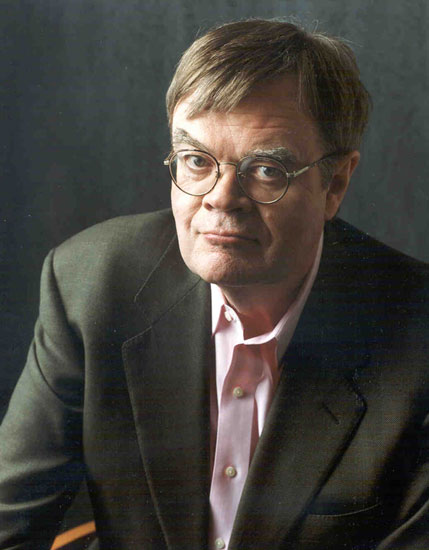
So, on the one hand, we’ve got authors like Konrath paving a DIY way for the vast majority of us writers…and, on the other, we’ve got the likes of Garrison Keillor bemoaning the fact that “book publishing is about to slide into the sea” with self-publishing because “when everyone’s a writer, no one is” in a column in yesterday’s Baltimore Sun.

Here is what he said in part:

We live in a literate time, and our children are writing up a storm, often combining letters and numerals (U R 2 1derful), blogging like crazy, reading for hours off their little screens, surfing around from Henry James to Jesse James to the epistle of James to pajamas to Obama to Alabama to Alanon to non-sequiturs, sequins, penguins, penal institutions, and it’s all free, and you read freely, you’re not committed to anything the way you are when you shell out $30 for a book, you’re like a hummingbird in an endless meadow of flowers.

And if you want to write, you just write and publish yourself. No need to ask permission, just open a website. And if you want to write a book, you just write it, send it to Lulu.com or BookSurge at Amazon or Pubit or ExLibris and you’ve got yourself an e-book. No problem. And that is the future of publishing: 18 million authors in America, each with an average of 14 readers, eight of whom are blood relatives. Average annual earnings: $1.75.

Back in the day, we became writers through the laying on of hands. Some teacher who we worshipped touched our shoulder, and this benediction saw us through a hundred defeats. And then an editor smiled on us and wrote us a check, and our babies got shoes. But in the New Era, writers will be self-anointed. No passing of the torch. Just sit down and write the book. And the New York Times, the great brand name of publishing, whose imprimatur you covet for your book (‘brilliantly lyrical, edgy, suffused with light’ – NY Times) will vanish (Poof!). And editors will vanish.

The upside of self-publishing is that you can write whatever you wish, utter freedom, and that also is the downside. You can write whatever you wish, and everyone in the world can exercise their right to read the first three sentences and delete the rest.

Ouch!

I’d like to think that the stories I write are worth more than the first three sentences. But he does have a point. There are so many more novels being written today, so many more queries being sent out today. The odds of getting picked up by an agent, not to mention a big publishing house, have grown so long that it really does come down to a matter of luck and timing…and that’s only AFTER you’ve written something truly worthy.

I wish I’d started up this path 30 years ago, but I didn’t. Am I going to give up? No way. My knees may be weak, but I’ve got strong fingers. Besides, the higher the mountain, the greater the achievement.


Originally posted 2010-05-26 17:02:24.

The 15 Reasons We Write

Or do any other art, for that matter, because I think the following list applies to all the arts.

Lest you think I’ve thrown over my writing for narration and producing, let me assure you I’ve been writing.

But why? Narration, in comparison, seems so easy. Why then do I write?

Several articles and bits on the Internet over the past month have put my mind in a whirl, ending with a FB posting by a fellow author on a private FB page that elicited several responses from other authors…all of which I read at 10 p.m. last night (a big mistake).

As you may imagine, I went to bed but could not get to sleep. The gist of her posting had been about our motivations to write, good or bad, mistaken or not. All these things kept me turning from side to side, my eyes wide open, until I finally made a bargain with my brain.

“Brain,” I said, “if you will just shut down for a few hours, I promise to work all this out in the morning.”

There was no immediate reply, so half an hour later, I added, “Please.”

That must have worked because I woke up five and a half hours later, a little bleary-eyed, but grateful nonetheless.

So I’m keeping my end of the bargain with my brain.

This is my list of the 15 reasons I could conceive that cause us to write (or do any other art):

  1. It’s an addiction…an irresistible urge or need to set fingers to keyboard or pen to paper and create words on a page (or whatever your art entails).
  2. It’s a calling…and, yes, there is a difference between this and number 1; an addiction is irresistible, while a calling can be resisted or put off, sometimes for days, sometimes months or even years.
  3. It makes us happy…the very act of creation, in and of itself, whether we get published and see sales or not, brings us joy.
  4. It helps us organize the disorganized…any creative endeavor entails organizing disorganized matter, whether it be thoughts zooming in every direction through our brain, pictures in our mind that come randomly, etc.)
  5. It helps us work through things emotionally…whether it’s dealing with trauma, assuaging guilt, or whatever is weighing on us consciously or subconsciously.
  6. We want to gain acclaim or popularity…either with the so-called literati or the mainstream, or both.
  7. We want to gain power or a platform…in order to influence others (which is kind of ironic because we authors these days are told to build our platforms first if we want to even be published…of course, we do this by writing on blogs, websites, social media, etc.)
  8. We want to make extra money…not that we need it, but we could use it to help our families, friends, etc.
  9. We want to survive economically…now, in this case, we absolutely depend on the money we can make from writing (which is usually next to nothing).
  10. We want to teach, inform, or help…we use our writing to open the eyes of our readers to history or new ways of doing things, or to share solutions to common problems. (This is where a lot of non-fiction comes in, but it can also include fiction.)
  11. We want to persuade others to our view…everything from propaganda to persuasive essays (and novels often do this in subtle ways, too).
  12. We want to hone a talent…because we’ve been taught that only practice makes perfect and if we leave a talent alone, it will be lost.
  13. We want to find our voice…there is an intrinsic need to not only know who we are but then express that through our art. (This is not necessarily the same as number 1, because some writers are more consumed by story than voice.)
  14. We want to find our audience…after all, what good is a voice without an audience, even if it’s only an audience of one?
  15. We want to discover truth…and so often, while engaged in our art, it spills out unexpected, especially to the author, composer, choreographer, artist, actor, director, etc.

Now, having proposed all those reasons, I am certainly open to more. Please comment below if you have any quibbles with this list or any addendum.

The important thing each writer (or artist) must do, I believe, is to check off those items on the list that apply to them and disregard the others. Once we recognize all the different reasons we write, our path to feeling fulfilled by our craft will be clearer. It will become clearest if we can then prioritize our motivations.

For example, if you aren’t concerned about using your writing to survive economically or to gain popularity, then you needn’t worry about marketing or sales. You may be after acclaim, but not popularity…in that case, you’re going to want a traditional publisher (and maybe an MFA), but sales won’t be nearly as important as your voice and skill. Two of the six books shortlisted for this year’s Man Booker Prize have sold less than 4,000 copies.

For me, numbers 1, 7, 9, and 11 don’t apply at all. And I think number 15 is my prime motivator, which is a relief, really, because finding truth has absolutely nothing to do with getting an agent, getting traditionally published, getting on the NYT Bestseller list, or winning awards.

That’s why the account of the Italian author, Elena Ferrante, in the Guardian struck such a chord with me and started all my cogitating about a writer’s motivations. I loved what she wrote in her letter to the publisher about her first book (and they took her on anyway, by the way):

“I believe that books, once they are written, have no need of their authors.”

“I do not intend to do anything for [the novel] Troubling Love, anything that might involve the public engagement of me personally. I’ve already done enough for this long story: I wrote it. If the book is worth anything, that should be sufficient. I won’t participate in discussions and conferences, if I’m invited. I won’t go and accept prizes, if any are awarded to me. I will never promote the book, especially on television, not in Italy or, as the case may be, abroad. I will be interviewed only in writing, but I would prefer to limit even that to the indispensable minimum… I understand that this may cause some difficulties at the publishing house… I don’t want to cause trouble. If you no longer mean to support me, tell me right away, I’ll understand. It’s not at all necessary for me to publish this book…”.

All I can say is “Brava!”

So what are your motivations? Please share.

I am going to try for the next 15 weeks to blog at greater length about each of these reasons, so look for more about writing being an addiction next week.

While I don’t suffer such an irresistible urge, I know plenty who do. If you’re one of them, let me know if you’d like to guest post for me about it.

Originally posted 2015-09-22 10:41:02.